Written by: Dawn Lurie, Alexander Madrak and Matthew Parker*
Morning of uncertainty
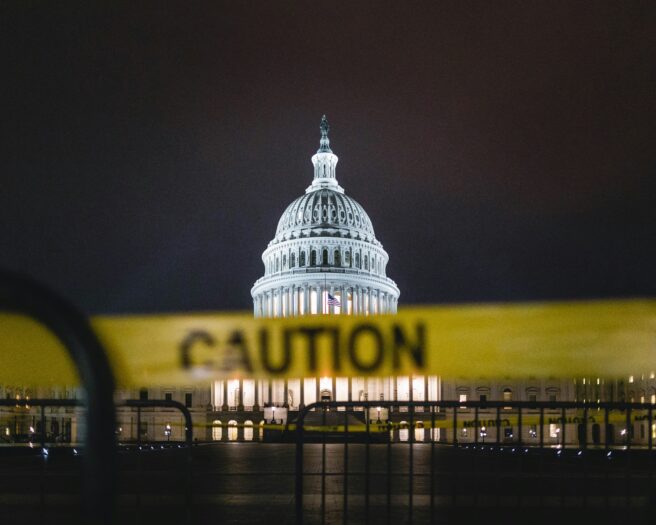
Employers this morning woke up to the news of the closure of the federal government, which prompted immediate concern about compliance with the employment license. The main between those concerns: the availability of E-Verify. Questions like “Will E-Verify online remain on the Internet?” “What is happening to my new employment?” And “Do you still need to complete the I-9 model?” It is traded understandable throughout human resources and legal departments.
At approximately 11:45 am on October 1, USCIS (USCIS) announced that E-Verify has been suspended due to the ongoing government closure. Uscis was in the process of taking the system without contact at the time. Accordingly, employers will not be able to register in the system, start new cases, manage or receive updates on those that exist, or access to technical support. Please subscribe to our blog through the migration lens for continuous updates.
E-phobic
Although E-Verify is approved under the Law on illegal Immigration Reform and the responsibility of migrants for 1996 (iirira), its operations are still at risk during the closure of the federal government. Unlike some other USCis software that is funded by user fees, E-Verify depends on annual Congress credits. Given this, the system was suspended during the past closure. Accordingly, the current suspension is not surprising.
Similar to previous pendants, employers will not be able to create new cases, register in the program, solve initial assurances (TNCS) or access account data. Although the current administration has indicated a strong focus on verifying employment and compliance, the reality is that the E-Vertife cannot work without government money, regardless of the position of the management policy.
The closure does not stop i-9s
However, the commitment to completing the i-9 is still unchanged. Employers must ensure that the employees from section 1 of the I-9 form or before their first working day, and the employers complete section 2 within three working days from the date of the employee’s start. Government closure has no effect on this requirement.
What happens now after Verify decreased?
Uscis follows the same playing book from the previous closure. Meanwhile, Uscis suspended the “three-day base” to create an E-Verify case, allowing employers to delay requests without a penalty. Likewise, the employees who move in the initial assertion (TNC) have been granted additional time to solve their issues.
Although we are waiting for more USCis directions regarding this closure, it is reasonable to expect USCis to follow previous practices in case of disruption to system access. In order for UScis to provide official directives, employers must assume that all rules are valid.
Think about registration?
The E-Verify is widely considered the best practice, but it is not without obligations. The employers who consider registration must understand the responsibilities of compliance related to the program, including the status of the status of monitoring and responding immediately to the system alerts. Modern changes, such as automatic notifications for the employed work license, have put a greater responsibility for employers. Many employers appreciated such notifications, while others consider a burden that creates an unfair advantage for non -displaced employers who had no knowledge of reducing employment license for some conditional release.
Nothing is perfect
The E-Verify remains vulnerable to theft of identity and fraud on documents, because its effectiveness is only as strong as the information owners who enter it into the system. Employers work as the first defense line and they must apply the “reasonable person” standard when reviewing the documents of licensing and licensing work, and accepting only those that appear real, belonging to the employee, which is valid for the face. E-Verify may not always discover fraud, for example, when the employee displays a valid social security number and an identity card that has been legally released, but not for new rental or documents that were actually manufactured (fraud). This is still an advanced field, and the E-Verify continues to expand the capabilities of fraud, including building partnerships with agencies such as DMVS state to clarify identity data and science contradictions.
What employers should do now
At this time, employers must continue to complete the I-9 forms on the specified date, and when required or allowed, create electronic cases within the required time frame. It is also important to monitor the Uscis page for updates, and to communicate proactively with affected employees, especially those who have suspended TNCS, and document any operational difficulties arising due to the closure.
Employers must ensure that internal human resources teams are on the science, training and preparation of potential changes. In the event, the E-Verify becomes unavailable, and the immediate procedure and clear documents will be necessary to maintain compliance.
The closure should not mean the collapse of compliance
While government closure is troubled, they are not impossible to lapse in legal obligations. In an environment of increased implementation, preparation and vigilance are still necessary. E-Verify may be run at the present time, but employers must prepare for a possible transformation in the coming days.
We will continue to monitor developments closely and provide updated guidelines with the development of the situation. For more information or to ask for help by identifying compliance, monitoring or training, please call Dawn Lurie on Dlurie@seyfarth.com.
*Matthew Parker, an analyst in compliance with immigration. It is not accepted in the practice of law.
Thanks to Celine Malash, our case assistant, for helping her in this post.
For more information, contact your SEYFARTH or Dawn Lurie’s relationship. The Seyfarth EgGration Compliance and Enforgeter Pecurity group, recognized as national leaders in this field, is trusted by Fortune 100 companies in addition to small companies across the country for strategic and practical advice. The collection provides comprehensive instructions on the form I-9 and E-Verify Complion, ICE inspections, work enforcement procedures, internal immigration assessments, I-9 audits, wages and migration wages associated with immigration, HO-1B and PAFs, and DOJ-EIR anti-discrimination, including external care and control. The spaces/ITAR.